Introduction
A bullet vibrator costs 3FOBandretailsat12. That’s a 75% gross margin on a product smaller than a lipstick. A mid-sized retailer moves 50–100 bullets a month compared to five to ten full-size wands in the same period. The math isn’t complicated — bullets are the highest-velocity SKU in adult retail.
But velocity cuts both ways. A bullet with an LR44 battery that dies after 30 minutes generates returns at the same speed it generates sales. A wired bullet with a cable that frays at the strain relief point will have a 15%+ return rate within 90 days. The difference between a bullet that prints margin and a bullet that prints chargebacks is entirely in the power source, the material, and the QC you run before ordering.
This guide covers bullet types, battery versus rechargeable, price tiers, market preferences, and the quality failures specific to ultra-compact products. If you’re sourcing your first bullet line, start with our materials guide — at this size, a material substitution is almost invisible to the eye and catastrophic to the return rate.
Why Are Bullet Vibrators the Volume King?
Bullets don’t win on margin per unit. They win on unit velocity multiplied by margin percentage — and that combination beats almost every other category.
Lowest price threshold in the category. A 12–15retailbulletisthecheapestpoweredproductacustomercanbuy.It′sthegatewayproduct—theonefirst−timebuyersaddtocartwithoutdeliberation.Thatlowbarriergeneratestransactionvolumethatno60 wand can match.
Add-on and promotional gold. Bullets work as checkout upsells (“add a bullet for $10”), gift-with-purchase items, and promotional freebies at trade shows. The BOM cost is low enough to absorb as a marketing expense while still generating customer acquisition value.
Shipping cost advantage. A bullet weighs 30–80g. A wand weighs 250–500g. Freight cost per unit at the wholesale level is a fraction of larger products, and the retail shipping cost for e-commerce is negligible. This makes bullets ideal for free-shipping thresholds and dropshipping models.
The replacement cycle is fast. Bullets get lost in drawers. They get dropped in the shower. They get given to friends. The average replacement cycle is 6–12 months — faster than any powered product except budget TPE masturbators. A customer who buys a bullet today buys another one within a year.
The downside: extreme commoditization. Every factory in Dongguan produces a bullet vibrator. The shape is standardized. The function is standardized. The only real differentiation levers are the power source and the material. If you’re not competing on those two dimensions, you’re competing on price alone — and that’s a race to zero margin.
What Bullet Types Do Factories Offer?
Six bullet configurations dominate factory catalogs. Each has a distinct cost structure, failure profile, and target use case.
Classic Bullet (Wired Remote)
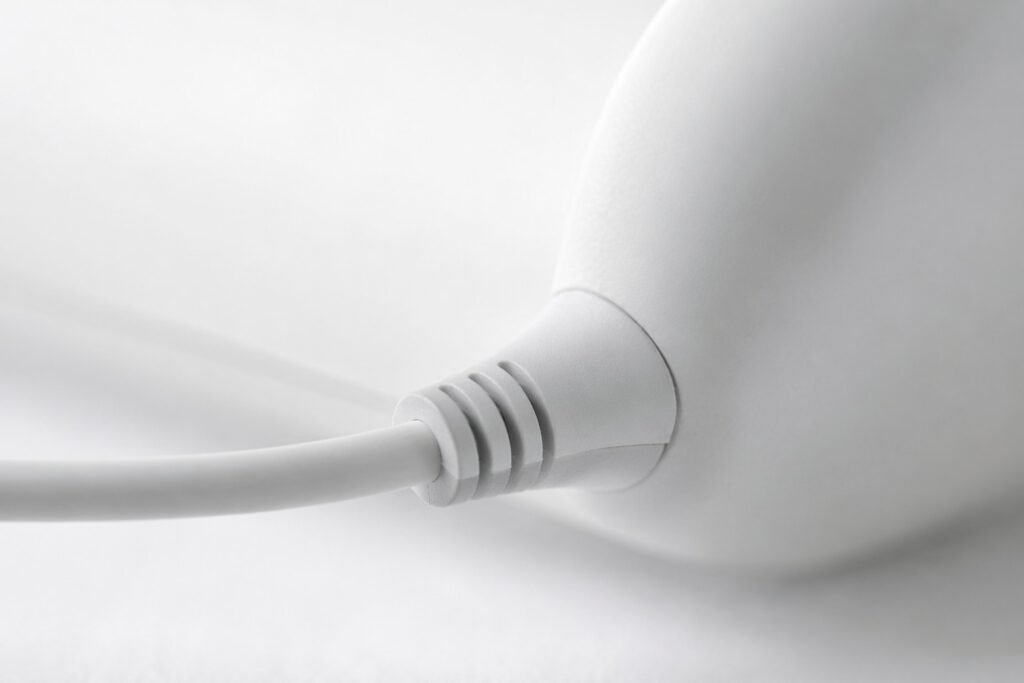
A small bullet connected by a thin cable to a battery-powered remote control. The user holds the remote and places the bullet. The cable is the product’s defining feature — and its defining weakness.
- BOM cost: $2–4
- Retail price: $8–15
- Failure point: Cable strain relief — the junction where the cable enters the bullet body and the remote body
- Market: Developing markets, budget lines, promotional giveaways
This is the cheapest powered vibrator you can source. It’s also the highest-return bullet type because the cable fails predictably. Test it by bending the cable at both strain relief points 50 times — any intermittency or visible wear is a rejection trigger.
Wireless Remote Bullet
The bullet communicates with a remote control via RF (typically 433 MHz) or Bluetooth. No cable means no cable failure — but it introduces pairing reliability and range as new failure vectors.
- BOM cost: $4–8
- Retail price: $15–30
- Range: 5–10 meters for RF, 10–15 meters for Bluetooth
- Market: US/EU entry-level, couple-oriented retail, gift sets
Test wireless range at the maximum claimed distance with a wall between the bullet and the remote. Many factories quote open-air range; real-world use puts fabric, bodies, and furniture between the transmitter and receiver. If it drops signal at half the claimed distance in real conditions, it will generate returns.
App-Controlled Bullet
Bluetooth connection to a smartphone app enables remote control over any distance via internet, custom pattern creation, and music synchronization. This is the highest-margin bullet configuration — and the most complex to execute.
- BOM cost: $6–12
- Retail price: $25–50
- Certification: FCC (US) or RED (EU) for Bluetooth, plus app store compliance
- Market: Tech-forward consumers, long-distance couples, premium gift
The app is the product as much as the hardware. A bullet with a buggy app is a returned bullet. Factor $2,000–5,000/year for app maintenance and OS compatibility updates. If your supplier provides a white-label app, test it on both iOS and Android, on a two-year-old phone, before committing. A factory’s in-house app that hasn’t been updated in eighteen months will break on the next OS update.
Wearable / Panty Bullet
A flattened, wider bullet with a magnetic base that secures it to underwear. The magnet is the critical component — a weak magnet means the bullet shifts during movement and the user loses contact. The shape makes it invisible under clothing, which is the entire value proposition.
- BOM cost: $5–10
- Retail price: $20–40
- Critical component: Magnetic base — test holding force against fabric of varying thickness
- Market: Female consumers, outdoor/discreet use, couple play
The magnet must hold through one layer of typical underwear fabric during normal walking movement. Test this by attaching the bullet to a fabric swatch and shaking it for 30 seconds. If it detaches, the magnet is undersized and the product will generate complaints.
Finger Bullet
A miniature vibrator that slips onto a fingertip like a sleeve. It’s the smallest and most precise bullet type — vibration is delivered exactly where the finger points.
- BOM cost: $2–5
- Retail price: $10–20
- Key requirement: Secure fit — the sleeve must not slip off during use
- Market: First-time buyers, foreplay-focused retail, travel accessories
The silicone sleeve that holds the bullet on the finger stretches with repeated use. Test fit by putting it on and off 20 times. If it loosens noticeably, the silicone is too thin or the formulation is wrong — and the product becomes unusable within a month.
Dual Bullet (Tongue + Bullet)
Two bullet-shaped stimulators connected to a single controller. Typically one bullet and one tongue-shaped stimulator, allowing two-contact-point stimulation from one device.
- BOM cost: $5–10
- Retail price: $20–45
- Complexity: Two motors, one controller, shared battery — power distribution matters
- Market: Mid-tier couples market, novelty and variety seekers
The power split between the two stimulators should be equal at the same setting. Test by running both at maximum speed simultaneously — if one noticeably drops in intensity, the power circuit can’t drive both motors at full load, and users will notice.
Battery vs Rechargeable: What Should You Stock?
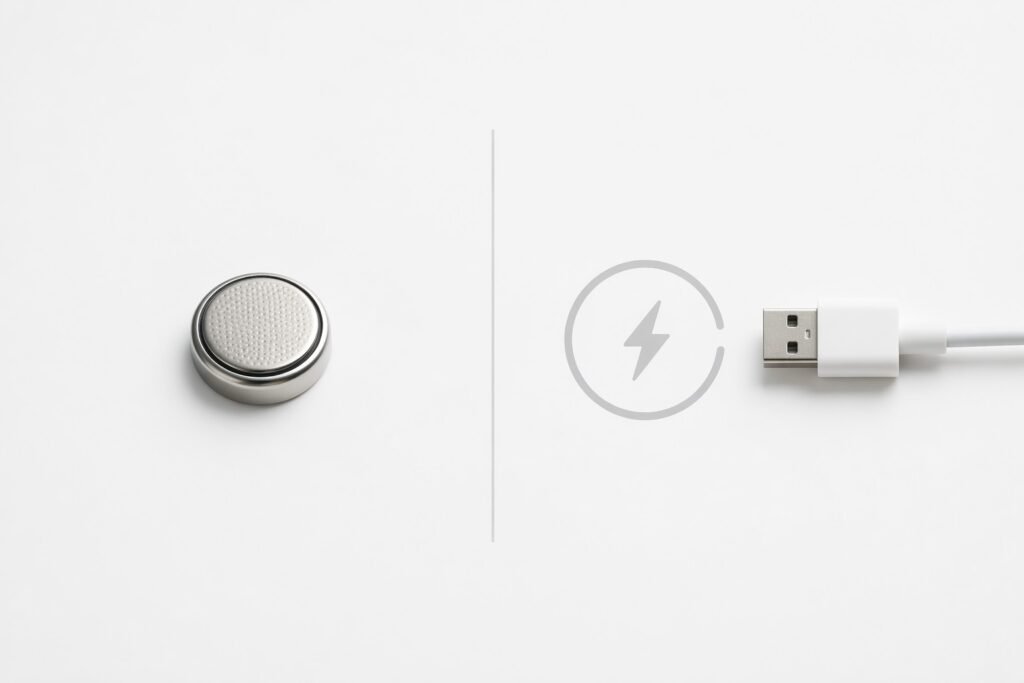
The power source is the single most important sourcing decision for bullet vibrators. It determines BOM cost, user experience, return rate, and shipping requirements.
Disposable Battery (LR44 / AAA / AA)
Button cell batteries — typically LR44, sometimes AAA or AA for larger bullets — are the traditional power source.
Advantages:
- Lowest BOM cost — no charging circuit, no battery management, no lithium handling
- Ready to use out of the box — no charging before first use
- No battery aging — the product doesn’t degrade on the shelf
- Standard shipping — no UN38.3 requirement for non-lithium disposable batteries
Disadvantages:
- Short runtime — LR44 batteries deliver 30–60 minutes on a single-speed bullet
- Battery replacement is inconvenient for the user — small screws, tiny cells
- Waterproofing is difficult — battery compartments need seals that degrade over time
- Environmental perception — disposable batteries are increasingly negative in EU markets
Best for: Promotional giveaways, budget lines, developing markets, and any use case where the product is a one-time or occasional-use item.
Built-in Rechargeable (Lithium-Ion)
An integrated lithium battery with USB or magnetic charging. This is the dominant configuration for any bullet positioned above the budget tier.
Advantages:
- Longer runtime — 60–90 minutes from a small lithium cell
- USB charging is convenient — the user already has a charger
- Waterproofing achievable — IPX6 and IPX7 with magnetic charging
- Modern consumer expectation — rechargeable is the default for products above $20 retail
Disadvantages:
- BOM cost adder — $1–3 for battery, charging circuit, and battery management IC
- Battery aging — capacity declines after 300–500 charge cycles, shelf life is finite
- Lithium shipping — requires UN38.3 test certification for air and sea freight
- Heat management — a charging circuit in a 50g product with no ventilation runs hot
Best for: Any product positioned above $15 retail, any brand with a quality reputation, and any market where consumers expect rechargeable as standard (US, EU, AU, JP).
Comparison at a Glance
| Feature | Disposable Battery | Rechargeable |
|---|---|---|
| BOM cost | $2–5 | $4–12 |
| Runtime | 30–60 minutes | 60–90 minutes |
| Waterproofing | Difficult | IPX6–7 achievable |
| Shipping | Standard | UN38.3 required |
| Shelf life | Indefinite (replace battery) | 2–3 years (battery degradation) |
| Retail positioning | Entry / promotional | Mid-tier / premium |
| EU consumer preference | Declining | Expected |
If you stock one bullet: make it rechargeable. The BOM premium is 1–3fora10–15 retail price uplift and a significantly lower return rate. The math works.
If you stock two: run a disposable-battery bullet as your volume/entry SKU and a rechargeable bullet as your margin/premium SKU. The disposable unit drives traffic. The rechargeable unit drives profit.
What Are the Price Tiers and Margins?
Bullet vibrators span a narrow absolute price range — 2to18 FOB — but a wide relative range in margin structure and retail positioning.
| Tier | Configuration | FOB Price | Retail Price | Gross Margin |
|---|---|---|---|---|
| Promo / Entry | Wired remote, LR44, single-speed, ABS body | $2–5 | $8–15 | 65–75% |
| Basic | Wireless remote, LR44 or AAA, silicone tip, 3–5 speeds | $4–8 | $15–25 | 62–68% |
| Mid | Rechargeable, full silicone body, 10+ patterns, IPX6 | $6–12 | $25–40 | 65–72% |
| Premium | Rechargeable, app control, IPX7, memory, storage case | $10–18 | $40–60 | 70–78% |
The absolute dollar profit per unit is small — 3–12dependingontier.Volumecompensates.Aretailerthatsells100bulletspermonthat6 gross profit each generates $600 in bullet margin alone. Double that with an attachment upsell strategy and the category contribution is significant.
The margin percentage is deceptively high because the BOM cost is so low. But that also means a single quality issue that triggers a batch return wipes out the profit from 50+ units sold. QC intensity should be proportional to unit velocity, not unit cost.
What Sells Where? Market Preferences
Bullet preferences are more fragmented by market than larger vibrator categories because the price point is low enough that cultural and practical preferences drive choice more than budget constraints.
| Market | Preferred Type | Price Range | Key Requirements |
|---|---|---|---|
| United States | Rechargeable, wireless remote | $20–45 | IPX7, multi-pattern, silicone, bold colors |
| Europe | Rechargeable, quiet, elegant | £15–35 | CE + UKCA, ≤45 dB, recyclable packaging |
| Japan | Ultra-compact, ultra-quiet | ¥1,500–4,000 | ≤40 dB, finger bullets popular, refined colors |
| Middle East | Disposable battery, small | $8–20 | Discreet packaging, wireless remote for privacy |
| Southeast Asia | Disposable battery, colorful | $5–15 | Bright colors, basic waterproof, price-first |
Japan stands out: finger bullets and ultra-compact designs dominate. A bullet larger than 8 cm in length won’t sell in Japanese retail as a first SKU. Noise is the dealbreaker — Japanese consumers tolerate weaker vibration in exchange for silence. If your bullet runs above 40 dB, don’t send it to Japan.
EU markets: noise and packaging are mandatory differentiators. A bullet at 48 dB generates returns in Germany. Non-recyclable blister packaging is increasingly rejected by EU retailers. Budget for paperboard or molded-pulp packaging if Europe is a target market.
Middle East: the bullet’s small size is an advantage for discreet retail display and consumer privacy, but the outer packaging must be completely neutral — no product imagery, ambiguous product name. Wireless remote bullets sell better than app-controlled because they don’t require a smartphone pairing that may be visible to others.
What Are the Most Common Bullet Quality Issues?
A bullet’s small size creates quality risks that larger products don’t face. Heat dissipation, battery contact, and cable strain are all harder to manage in a 50g package.
| Issue | Test Reference | Impact |
|---|---|---|
| LR44 battery loses contact during vibration | Shake test — 30 seconds at max speed | Intermittent power loss → return driver #1 |
| Wired bullet cable frays at strain relief | Cable bend test — 50 cycles at both ends | Structural failure → product unusable |
| Wireless pairing fails beyond 3 meters | Range test — 5m with obstruction | Advertised range is false → returns |
| Rechargeable runtime under 50% of spec | Test 4 — charge and runtime test | False capacity claim → batch returns |
| Silicone tip bleeds oil on paper | Test 2 — oil bleed test | Material substitution → compliance risk |
| Noise exceeds 55 dB at full speed | Test 7 — noise test | Small + loud = unacceptable to user |
| Magnetic charging contacts oxidize | Visual inspection after 48h in humidity | Charging failure → dead product |
| Housing exceeds 45°C after 15 min continuous run | Temperature test — infrared thermometer | Overheating → safety risk |
Full methodology for each referenced test is in our sample testing checklist.
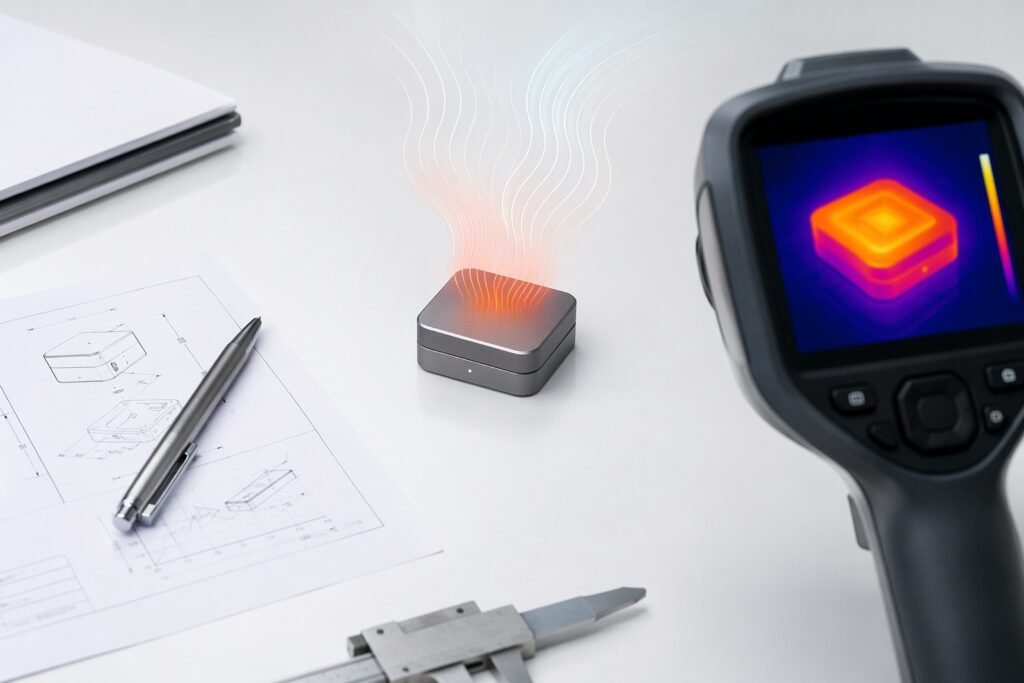
The bullet-specific risk: heat. A small lithium battery charging inside a sealed silicone body with zero ventilation is a thermal management problem. During sample testing, run the bullet at maximum speed for 15 minutes and measure the housing temperature with an infrared thermometer. If it exceeds 45°C, the product lacks adequate thermal protection. At production scale, this becomes a battery safety issue — not a comfort issue.
The other bullet-specific risk: the battery door. Disposable-battery bullets use a small screw-on or snap-fit battery compartment cover. This cover is the only moving mechanical part on the product and it fails in predictable ways: the threads strip, the snap tabs break, the O-ring seal degrades. Test the battery door by opening and closing it 20 times. If it’s loose by cycle 10, it will be useless by month three of consumer use.
What Are the MOQ and Customization Options?
Standard bullet MOQ: 60 units per carton. Mixed-carton orders: 10 units minimum per SKU per color.
For detailed mixed-carton rules, see our MOQ and wholesale pricing guide.
OEM customization (your branding on an existing mold): 1,000 units minimum. Customizable elements include color, logo, packaging design, and button printing. Lead time: 3–5 weeks.
ODM customization (new mold, your design): 1,000 units minimum + mold fee. Lead time: 4–8 weeks for mold fabrication plus production.
Common customization requests:
- Silicone body color matched to brand palette
- Logo debossed or printed on the bullet body
- Packaging from white box to branded retail box with insert
- Button color and tactile feedback adjustment
- Storage pouch or travel case included
The Bottom Line
A bullet vibrator isn’t the most exciting product in your catalog. It’s the one that sells while you’re sleeping — the $12 add-on at checkout, the impulse buy at the counter, the gift your customer’s customer grabs on the way to a party.
Source it like a commodity but QC it like a premium product. The power source decision — battery or rechargeable — is your margin lever. The material decision — silicone or blend — is your return-rate lever. Get both right and the category prints money at any scale.
A bad bullet generates a return, a refund, and a lost repeat customer from a 12transaction.Agoodbulletgeneratesarepeatpurchasewithinayear.Thesourcingmathissimple:spendtheextra1 on the rechargeable circuit and the extra $2 on the real silicone. It pays back on the first avoided return.
Sourcing bullet vibrators and need help picking the right configuration for your market? Contact AmorSerere for product recommendations and wholesale pricing →