Introduction
When you’re building a sexual wellness brand, product sourcing usually comes down to two paths: private label or white label. The terms get thrown around so much they can start to feel interchangeable, but they’re not. They come with different costs, timelines, and levels of creative control.
Getting this choice right matters. It determines how much upfront capital you need, how fast you can launch, and how much brand equity you actually build. This article breaks down what each model really means and who should choose which.
White Label: Branding an Existing Product
White label means you take a product that already exists and apply your own branding to it. The design, materials, and functionality stay the same—you’re adding your logo, packaging design, and maybe a custom insert card.
Who white label works best for:
- You’re launching your first product and want to test the market
- You need a faster turnaround than full custom development
- You’ve identified a proven product that aligns with your brand positioning
- Your budget is tighter and you want to minimize upfront costs
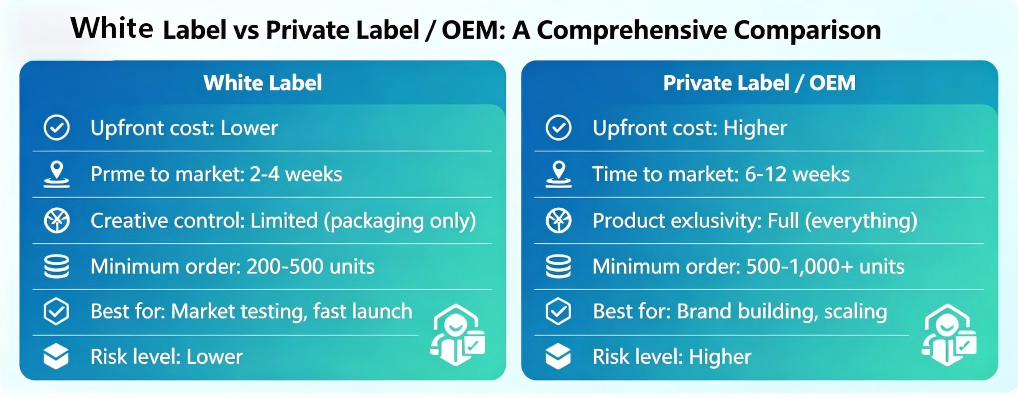
Typical timeline: 2-4 weeks for branding and packaging setup
Typical MOQ: 200-500 units per SKU
The advantage: Speed and lower risk. You know the product works because it’s already been tested in production. You’re not paying for mold development or engineering time.
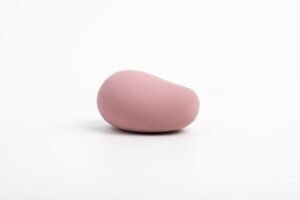
The limitation: You’re one of several brands selling the same core product. Your packaging might differentiate you, but the product itself isn’t exclusive. When a customer compares your Rose toy to a competitor’s and recognizes they’re identical, your brand story takes a hit.
Private Label / OEM: Building a Product That’s Uniquely Yours
Private label, in the way we use the term at AmorSerere, means full custom development. You’re not just adding a logo to something that already exists. You’re involved in material selection, shape design, motor specifications, color matching, and packaging from the ground up.
Who full OEM works best for:
- You have a clear brand identity and want your products to reflect it
- You’ve validated demand in your category and are ready to scale
- You want exclusivity in your market
- You’re building a long-term brand, not just testing a product
Typical timeline: 6-12 weeks depending on complexity
Typical MOQ: 500-1,000+ units per SKU, plus mold fees
The advantage: Exclusivity and control. Your product is yours. Competitors can’t undercut you with the same item because no one else has it.
The limitation: Higher upfront investment and longer lead times. You’re paying for engineering time, mold development, and larger production runs.
Head-to-Head Comparison
How We Help You Decide
Most of the retailers we work with don’t choose one path and stay there forever. They start with white label, validate what sells, then transition their best performers into custom OEM products. We’ve seen this play out enough times to help you plan the sequence.
We’ll help you figure out:
- Which products in your target niche have the strongest market data
- Whether your launch timeline favors white label or if you have the runway for OEM
- What a realistic budget looks like for each option
- How to structure your first order so you’re not overcommitted on inventory
The path most of our clients take:
- Start with 3-5 white label products to establish brand presence
- Track sales data for 2-3 months, identify the top performers
- Develop custom OEM versions of your best sellers with exclusive features
- Phase out the white label versions as your custom products take over
Ready to Figure Out Your Sourcing Strategy?
Contact our wholesale team at wholesale@b2b.amorserere.com or submit a quote request through our website. Tell us about your brand vision, target market, and timeline. We’ll help you map out whether white label, OEM, or a hybrid approach makes the most sense for where you are right now—not where a factory wants you to be.